
Documents from the Purchase of our Home to Hold on to for a Potential Insurance Claim
The purchase of a home, especially in today’s seller’s market, will leave most buyers exhausted, and inundated with what seems like endless amounts of paperwork. Inevitably, much of it gets stored away, placed out of sight, or heaped into piles of documents associated with the acquisition of the home. However, several documents can be relevant and important for filing a roof claim or engaging in discovery in a subsequent lawsuit predicated upon said claim. So, what should one keep?
Why Do I Need an Attorney Before the Insurance Company Has Made Their Coverage Decision?
As a first-party property damage attorney, I consult homeowners at all phases of the pre-suit spectrum. Some approach our firm from the moment they report to the claim to the insurance company—while others wait until they receive a denial from the carrier. Sometimes, I am asked by potential clients…why don’t I just wait until I receive a denial from the insurance company before I retain an attorney?
Prompt Notice of Claim: What Does It Mean and Why Is It Important?
Picture this – your home is damaged by a storm, but the damage is minor. Maybe some hail damaged your fence, or you got “lucky” and the hurricane didn’t really hit your area; it just blew out a few screens on your pool enclosure. You call a handyman and get it repaired for a few hundred dollars, which is well below your deductible, so no problem right? You move on.
How HOA’s and COA’s Impact Property Damage Claims
Anyone who has ever lived in an Homeowners Association (“HOA”) or Condominium Owners Association (“COA”) community will start off with the upsides: my yard work is taken care of, there is a gate that makes me feel secure, the homes are all close together so there is a greater sense of community, I don’t have to maintain the community pool or gym, the homes all have to meet a certain standard that regulates our property values, etc. People often try to leave out the downsides like ordinance violations, trouble finding parking for visitors, seeking association approval before making repairs or improvements to your own home, etc. Moreover, in many communities the HOA and COA rules, regulations, ordinances, and declarations can cause serious problems for homeowners, especially if they have a property damage claim.
How Long Is My Case Going To Take?
This is a question we are often asked and a very reasonable one given why you have come to us. More likely than not, you have hired our office because you have damage to your home and you want to know if your insurance benefits will assist you in repairing it. Not only that, you sometimes have to look at the damage or experience the effects of the damage every day, all while it seems like the insurance company is taking their time. You might find yourself saying the following things “it is taking too long?” or “is this ever going to end?” The answer to the second question is “yes!” Once you hire us and if your case gets into litigation (note, some cases resolve without litigation – not as many – but some), there is an end in sight.
Keeping It Simple: Four Things a Homeowner Should Do To Make The Claims Process Easier
Besides a spontaneous pipe burst and the like, living in the state of Florida as we all know means hurricane season for roughly half the year, every year. Florida homeowners are therefore subject to an incredible potential for property damage constantly which often inevitably leads to opening an insurance claim at some point or another. Here are some useful, albeit obvious things you as a homeowner can do to simplify the process and reduce your own headache in the future:
Uninsured Motorist Coverage – Get This Yesterday

Today we will discuss uninsured motorist coverage in the state of Florida and you should have it and if you don’t have it, you should be on the phone with your car insurance carrier adding it now. Underinsured/Uninsured Motorist Coverage is insurance that you as a Florida driver can opt to carry on your own policy. Typically, in an accident, an injured driver would seek compensation and insurance benefits from the at-fault party in the collision. These benefits would be paid out from the at-fault’s Bodily Injury Coverage under the at-fault’s insurance policy. But what happens if that driver does not have high enough policy limits to support significant treatment and potential surgery costs? What if the at-fault driver has no insurance coverage at all?
How Legal Proceedings Have Changed After COVID-19
One of the main changes in the way that legal proceedings have changed as a result of the COVID-19 pandemic is that the majority of legal proceedings now take place online rather than in person. Prior to the pandemic, depositions, hearings, mediations, arbitrations, and jury trials all took place in person. For our client, this means that there were more travel costs associated with the litigation. It also meant if they needed to appear for a legal proceeding they would need to travel to the courthouse or to a court reporter or mediator’s office.
5 Tips On Protecting Your Home From Hurricane Damage
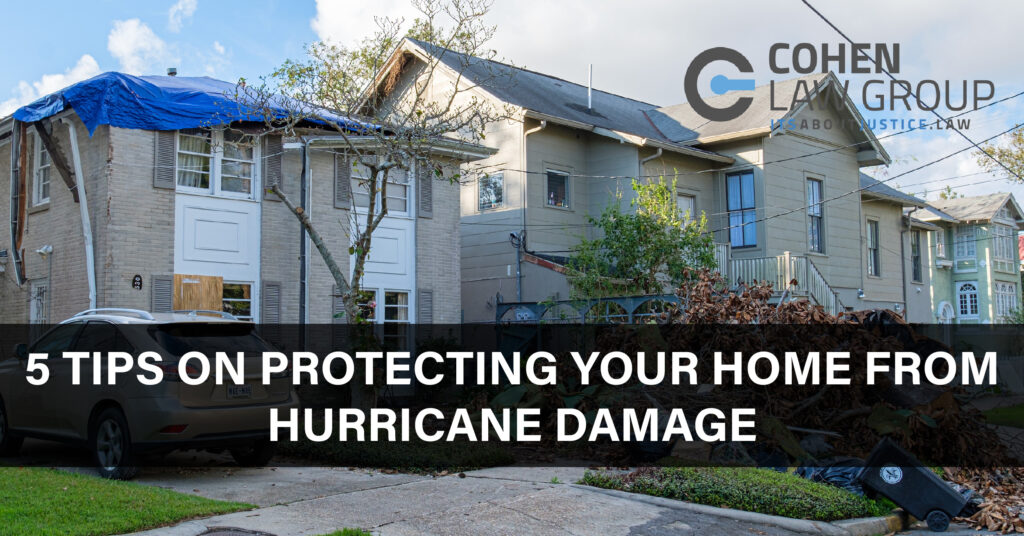
It is that season again that we all dread. No, not tax season, hurricane. Thankfully we have been fortunate to have not been hit by a major hurricane since Irma but like all lucky streaks this could end at any time. With that being said, here are 5 ways you can protect your home from a hurricane.
Why are Insurance Policies in the News? Don’t Be Bullied By Skewed Reports
Over the past few years there has been an explosion in the amount of publicity regarding homeowner’s insurance claims. A large amount of this publicity has come from the side of the property insurance companies in Florida. But what is rarely discussed is one of the main drivers of why litigation costs have risen to the levels that they have, that being the improper claims handling and litigation tactics of insurance companies themselves.