
If Your Roof isn’t Too Old to Insure, It’s Not Too Old Claim
At a young age we all learn that we have to honor our commitments. That a deal is a deal, and you shouldn’t go back one your word. An insurance Policy is no different. An insurance Policy is really nothing more than a contract, a deal. You, the homeowner agrees to pay, and the insurance company agrees to cover your property in case of a loss.
Understanding Surplus Lines Insurance Policies: Why You Might Need One
Insurance Companies might choose not to renew your homeowner’s insurance policy for any number of reasons. The most common of these reasons is simply that your house and situation no longer fits their acceptable risk profile. This decision from the insurance company can cause significant inconvenience and in some cases hardship no matter when it happens, but it can be particularly harmful if the insurance company does so while you are pursuing an insurance claim.
The Importance of a Roof’s Underlayment
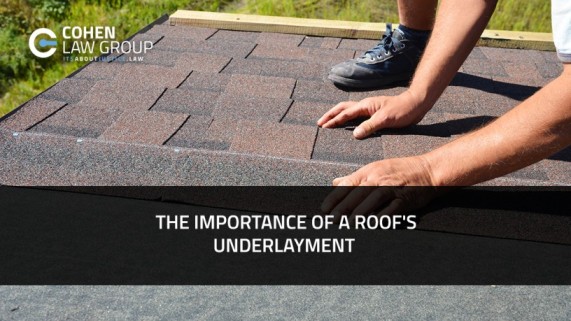
Your roof protects your home from the elements. Most people, when thinking of roofs, think of shingle or tile roofing, and the importance of roofing underlayment is often completely overlooked. While shingle or tile serves their purpose as the first line of defense for your roof, there are many different ways in which they can become damaged from a storm. Roofing underlayment protects your roof from moisture caused by rain and other severe weather like hurricanes, tornados, hailstorms, etc. The underlayment lies under the tile or shingle and is installed directly onto the roof decking. The underlayment is laid on top of your roof deck and serves to keep water from coming into your home. There are different types of underlayment, and while each kind has its respective pros and cons, the type you choose depends on things such as your home’s location, roofing tools used, and what design your roof is. Regardless of the type of underlayment you choose to use, the purpose is to protect your home from water intrusion.
Recent Florida Storms May Have Caused Damage to your Property
One of the most common issues I encounter when representing Florida homeowners relating to property damage caused by a storm or hurricane, is the issue of damage which the homeowner is not aware of for months or even years. Most homeowners in Florida are used to storms and hurricanes, however they do not usually make it a habit to inspect their roof and/or property immediately after the storm or hurricane has passed. In fact, most homeowners will incorrectly assume there is no damage after a storm or hurricane because they do not see any damage with their naked eye. However, consider that roof damage is not usually visible to the untrained eye, and often there is considerable roof damage caused by a storm/hurricane which will only be noticeable by a professional that has completed certain tests during an inspection.
The Importance of Reviewing Your Purchase Inspection
Purchasing a home is an exciting time. It is also a hectic time, with what can seem like a
mountain of paperwork to review and sign, in addition to packing, changing your address,
enrolling children in new schools, etc. Due to the excitement and unfamiliarity with the
documents, many people blindly sign the documents in front of them to get their hands on the
keys.
Repair Versus Replacement of Roofs in Florida
Your roof was damaged from a storm or hurricane. Your insurance company agreed that your roof was damaged, but only provided payment to repair a few shingles or tiles, rather than replacing the roof. What recourse do you have in this situation? In Florida, there are several reasons why a roof would need to be replaced, rather than repaired. Two of the most common reasons include: (1) the amount of damage to the roof; and (2) whether the damaged shingles or tiles can be replaced with shingles or tiles of like kind and quality.
Policy Renewals and Purchasing a Policy during COVID-19

While it appears the worst of the COVID-19 Pandemic is behind the Nation, the ramifications across the Home Owner’s Insurance market in Florida are still being felt and will very likely leave a lasting impact. The Underwriting divisions of each Carrier have largely reacted individually as the realities of operations throughout the last year with COVID-19 set in. Largely, home sales across Florida kept steady and the market remained strong, which normally would indicate a stronger market for Carriers, more homes being built and sold mean more Policies are being written and sold.
What Are Your Options: Non-Renewed Home Insurance

Insurance companies often catch their policy holders off guard when they choose to issue a notice of non-renewal. One should note that an insurance company can non-renew a home insurance policy for multiple reasons. A few of those reasons include no longer offering the coverage you were formally paying for or you no longer fit into their acceptable risk profile. When a policy holder receives a notice of non-renewal, it often leads to feelings of confusion and panic. If your policy is non-renewed, it is important to be aware of the options available to you.
COVID and Your Court Date

Courts, already overburdened by case loads, have found themselves in even more of a backlog due to COVID-19 pausing jury trials. As a result, cases have been unable to move forward and are piling up. Courts and attorneys have been trying to find ways to help alleviate this backlog. One avenue being taken is the use of non-binding arbitration, which is governed by section 44.103 of the Florida Statutes and rule 1.820 of the Civil Rules of Procedure.
Mortgage Moratorium and Forbearance Periods: Are you at risk for Foreclosure?
With the coronavirus pandemic, many people have found themselves in a position where they are unable to make ends meet, resulting in a failure to pay their mortgages. Fortunately for many, the Government has provided temporary relief by implementing a foreclosure moratorium for federally guaranteed mortgages until June 30, 2021. In addition, they have provided respite for Borrowers of non-federally backed mortgages, by making it more accessible to qualify for mortgage forbearance periods. What exactly do mortgage moratorium and foreclosure periods entail? Essentially, lenders and/or servicers temporarily allow Borrowers to reduce or skip making principal and interest payments for up to a year or longer. For some, this is their last shot and only shot at saving their home. But, while these periods allow Borrowers extra time in their homes, the question then remains, what happens when the moratorium and forbearance periods end? Could you be at risk of losing your home to foreclosure?