Florida Hurricane Warning
What the 2026 Forecast Changes Mean for Your Insurance Claim (For educational purposes only.)
If you own a home in Florida, something is changing this year that could quietly affect your ability to collect on a hurricane insurance claim—and most homeowners don’t know about it yet.
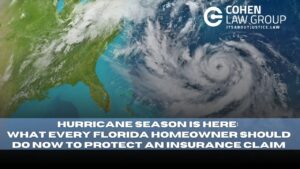
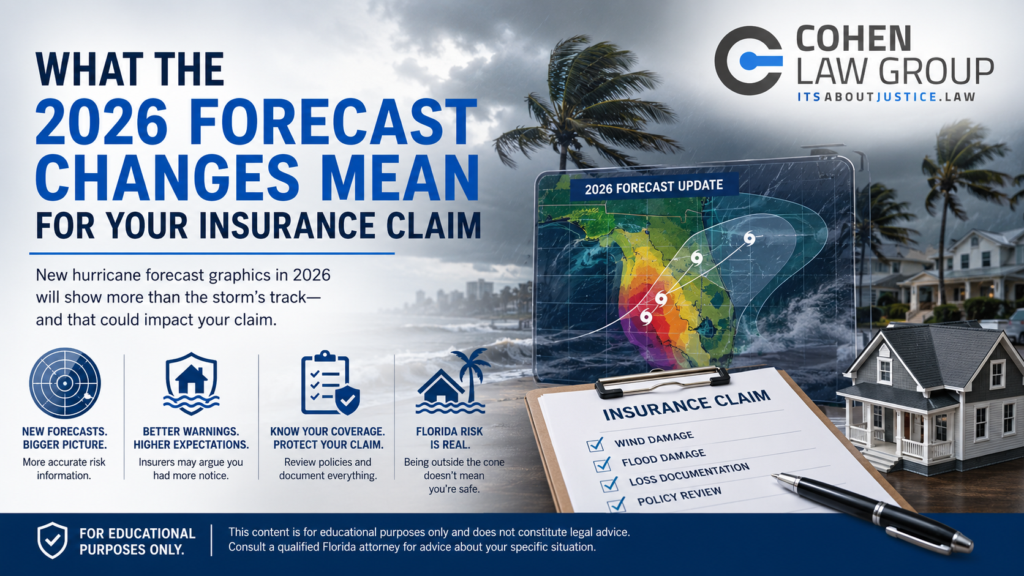
Starting in 2026, NOAA and the National Hurricane Center are updating their hurricane forecast graphics to better show where damage is likely to occur, not just where the storm’s center is headed. It sounds like a routine weather update. It isn’t.
The Problem With the Cone—And Why It’s Changing
Most Floridians know the “cone of uncertainty.” But here’s what it doesn’t show you: the cone only tracks the storm’s center.
Flooding, wind damage, and tornado activity routinely happen well outside that cone—sometimes hours away from where the eye makes landfall.
The new visuals are designed to fix that. But there’s a catch.
Clearer warnings cut both ways. If insurers can point to updated forecasts and argue you had sufficient notice to prepare, that becomes ammunition to dispute your claim—affecting approvals, payout amounts, and coverage decisions.
The Wind vs. Flood Battle
The most common fight after a Florida hurricane isn’t about whether damage happened.
It’s about what caused it.
Wind damage is typically covered under a standard homeowners policy. Flood damage usually isn’t—it requires a separate flood insurance policy.
As storm forecasting gets more precise, expect insurers to scrutinize this distinction more aggressively, including arguments around foreseeable risk and homeowner preparation.
Florida Is Especially Vulnerable
From Fort Lauderdale to Orlando, storms shift fast and rainfall flooding can devastate areas that never saw a drop of wind.
A significant number of Florida homeowners are underinsured for flood damage—sometimes without realizing it until a claim is denied.
Being outside the cone doesn’t mean you’re outside the danger zone.
What to Do Before Hurricane Season
Review Your Insurance Coverage
Review your policies now, especially flood coverage.
Document Your Property
Take photos and video of your property before hurricane season begins.
Follow Full Risk Forecasts
Pay attention to all forecast information, not just the cone.
Take Warnings Seriously
Preparation warnings matter—and insurers will pay attention to them.
If Your Claim Gets Denied, Delayed, or Underpaid
Insurance companies have entire teams dedicated to protecting their bottom line.
If your hurricane claim isn’t handled fairly, you have options.
Contact our office for a free consultation—we help Florida homeowners fight back and recover what they’re owed.
Disclaimer
This content is for informational purposes only and does not constitute legal advice. Hurricane damage claims and insurance disputes involve complex legal and factual issues that vary by situation. If your claim has been denied, delayed, or underpaid, we encourage you to speak with a licensed attorney who can evaluate your specific circumstances. Reading this article does not create an attorney-client relationship.